29
SEP
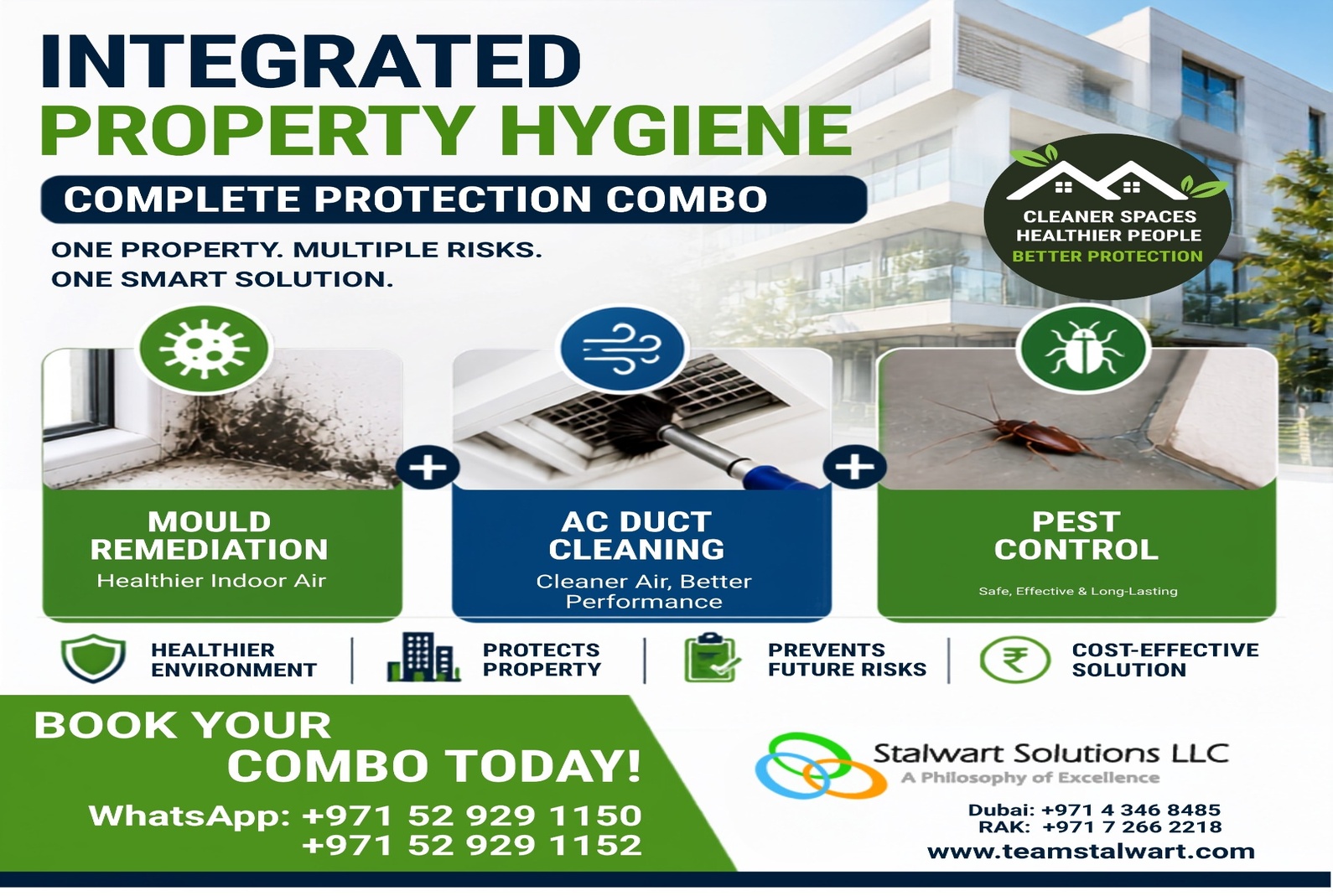
A clean and well-maintained property is more than a visually tidy space. Mould, AC duct contamination, pest activity and moisture-related issues can be interconnected, especially when underlying maintenance problems are left unresolved.
Instead of treating each problem separately, property owners and facility managers can take a more effective approach through integrated property hygiene.
Many building hygiene problems are linked to common conditions such as:
✦ Excess moisture and humidity
✦ Water leaks and condensation
✦ Poor ventilation
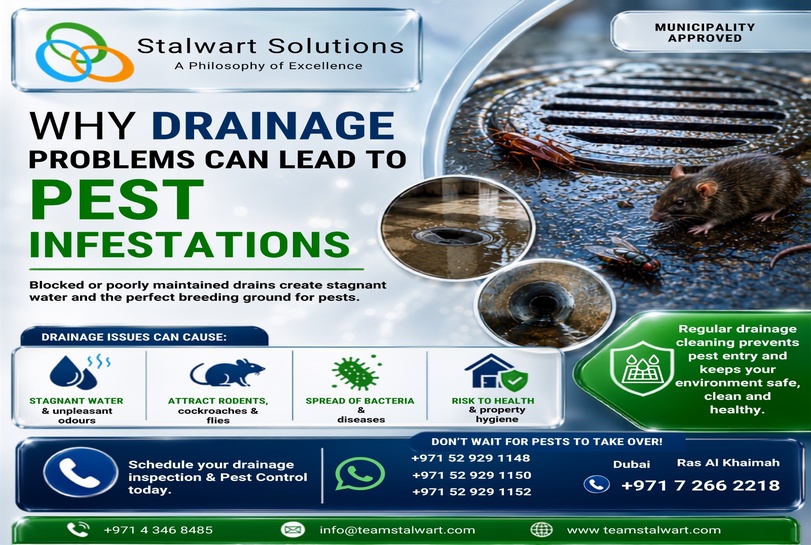
✦ Blocked or poorly maintained drainage
✦ Dust and debris accumulation
✦ Standing water
✦ Gaps and entry points that allow pests inside
When these conditions are not addressed, cleaning or treating only the visible problem may provide temporary results.
A better strategy is to identify the cause, treat the problem and put preventive measures in place.
The first step is understanding what is happening inside the property.
A professional inspection can help identify:
✦ Visible mould growth
✦ Moisture or water damage
✦ AC and ventilation concerns
✦ Drainage problems
✦ Pest activity
✦ Areas requiring deeper cleaning or maintenance
The goal is to identify problems before they become larger maintenance issues.
Treating the symptom without addressing the cause can lead to recurring problems.
For example, recurring mould may be associated with:
✦ Water leakage
✦ Condensation
✦ Poor ventilation
✦ Persistent dampness
Similarly, recurring pest activity may be encouraged by:
✦ Food sources
✦ Standing water
✦ Waste
✦ Damp areas
✦ Building access points
Understanding the underlying condition helps create a more effective treatment plan.
Once the source and affected areas are identified, appropriate cleaning and remediation can be carried out.
This may include:
Mould remediation
Addressing affected areas and the moisture conditions contributing to mould growth.
AC duct cleaning
Removing accumulated dust and contaminants where professional duct cleaning is appropriate.
Property hygiene cleaning
Maintaining areas where dirt, debris and moisture can accumulate.
The objective is not simply to make the property look cleaner, but to improve its overall hygiene condition.
Pest control should be part of the wider property hygiene strategy.
Professional pest management can address existing infestations while identifying conditions that may encourage pest activity.
Areas requiring attention may include:
✦ Kitchens and food-storage areas
✦ Waste collection points
✦ Drainage areas
✦ Damp spaces
✦ Service rooms
✦ Building entry points
Effective pest management combines treatment with prevention.
Cleaning alone cannot permanently resolve a leaking pipe, blocked drain or persistent moisture problem.
Where required, property maintenance should address issues such as:
✦ Water leaks
✦ Drainage blockages
✦ Condensation
✦ Poor ventilation
✦ Damaged seals
✦ Moisture intrusion
✦ Areas that allow pest entry
This is an important part of preventing the same problem from returning.
Property hygiene should not be treated as a one-time activity.
A preventive maintenance programme can include:
✦ Regular inspections
✦ Scheduled AC duct cleaning,
✦ Routine pest-control treatments
✦ Water and drainage checks
✦ Moisture monitoring
✦ Mould inspections
✦ Cleaning and sanitation schedules
Regular monitoring makes it easier to identify developing problems early.
A property may experience mould in one area, pest activity in another and AC-related cleanliness concerns somewhere else.
Treating these issues independently can leave the underlying conditions untouched.
An integrated approach connects the different areas of property hygiene:
INSPECT → IDENTIFY → CLEAN → CONTROL → CORRECT → PREVENT
This creates a more systematic approach to maintaining cleaner, healthier and better-managed properties.
Consider professional assessment when you notice:
✦ Recurring mould
✦ Musty or unpleasant odours
✦ Excessive dust around AC outlets
✦ Poor airflow
✦ Water leakage or condensation
✦ Recurring pest activity
✦ Blocked or slow drainage
✦ Damp or poorly ventilated areas
✦ Repeated hygiene complaints from occupants
Early action can help prevent small maintenance concerns from becoming larger and more expensive problems.
A healthy property requires more than occasional cleaning.
Mould remediation, AC duct cleaning and pest control, can be important parts of a wider property hygiene programme—but the most effective approach is to understand how these services connect with moisture, ventilation, drainage and preventive maintenance.
At Stalwart Solutions, an integrated approach to property hygiene can help property owners and facility managers address multiple building-maintenance concerns through a coordinated strategy.
Clean. Protect. Prevent. Maintain.
Talk to Stalwart Solutions about professional property hygiene and maintenance solutions.
Stalwart Solutions provides integrated solutions for mould remediation, AC duct cleaning, pest control and property maintenance.
Clean. Protect. Prevent. Maintain.
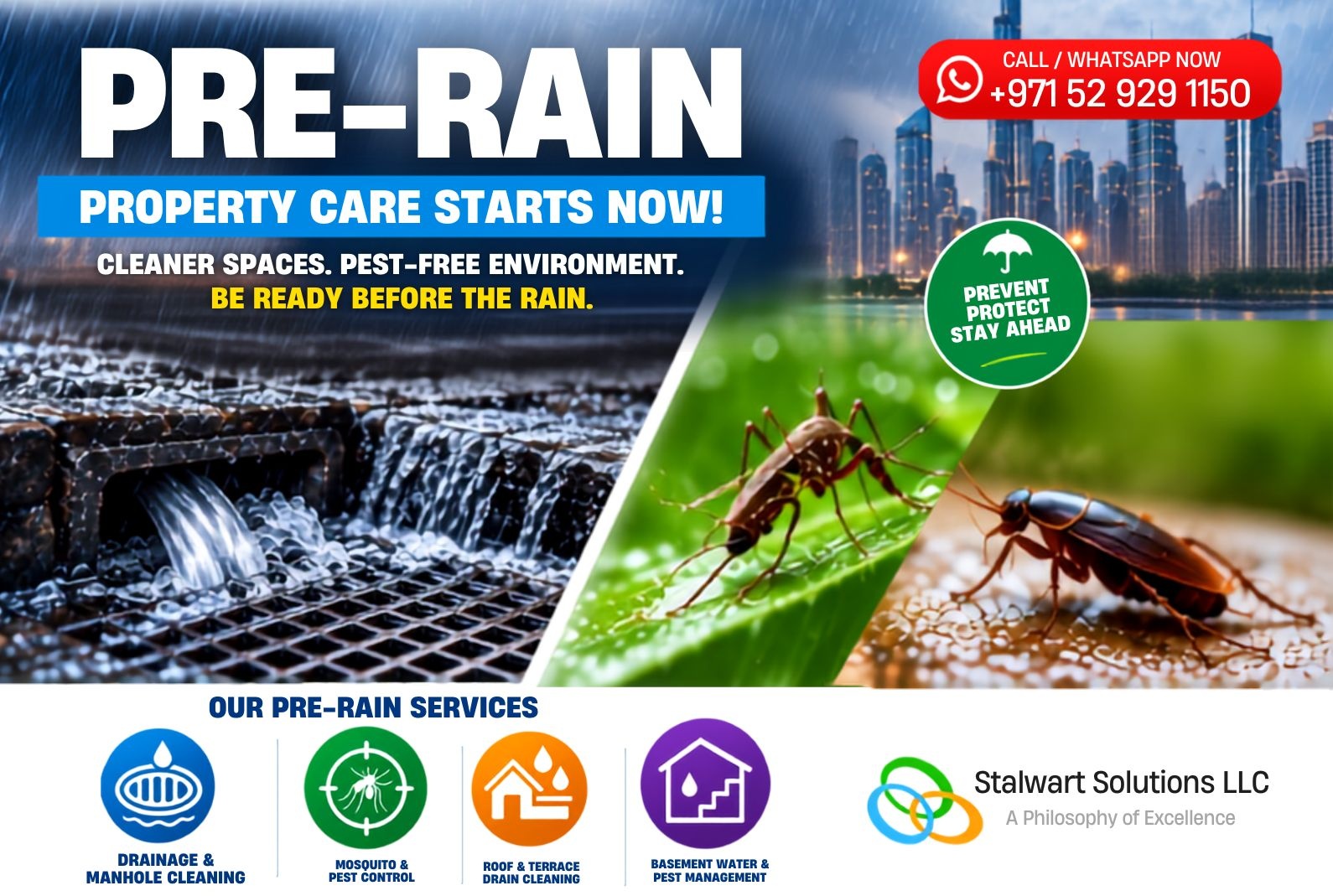
Protect your property from drainage-related pest problems. Book your drainage inspection and cleaning service today.
📍Service Coverage: Dubai & Ras Al Khaimah
📞 Phone / WhatsApp: +971 52 929 1148
🌐 Website: www.teamstalwart.com
Integrated property hygiene is a coordinated approach to maintaining a clean, healthy and well-managed property. It brings together inspection, mould remediation, AC duct cleaning, pest control, maintenance and preventive measures.
These issues can sometimes share underlying conditions such as moisture, condensation, poor ventilation, drainage problems and inadequate maintenance. Addressing the wider conditions can help reduce recurring problems.
Moisture within or around HVAC components can create conditions suitable for mould growth. If mould is suspected in an HVAC system, the moisture source should also be investigated rather than relying on cleaning alone.
Mould generally requires moisture to grow. If mould keeps returning, it is important to investigate possible sources such as leaks, condensation, dampness or inadequate ventilation.
Yes. Blocked drainage, standing water, organic debris and damp areas can create conditions that may attract certain pests. Addressing drainage and sanitation issues can therefore form part of an effective pest-management strategy.
There is no single schedule suitable for every property. The appropriate frequency depends on factors such as building use, indoor conditions, dust levels, HVAC condition and maintenance requirements. A professional assessment can help determine the appropriate schedule.
Not necessarily. Removing visible mould without addressing the moisture source can allow the problem to return. A proper approach should consider both mould removal and moisture control.
Common warning signs include recurring mould, musty odours, excessive dust, poor AC airflow, water leakage or condensation, recurring pest activity, standing water, drainage problems, and damp or poorly ventilated areas.
It can help by combining inspection, treatment, corrective maintenance and ongoing monitoring rather than focusing only on visible symptoms.
Depending on the property's requirements, it may include mould remediation → AC duct cleaning → pest control → drainage maintenance → moisture management → preventive inspections → ongoing monitoring.
Yes. It can be particularly useful for offices, residential buildings, commercial facilities, hospitality properties and other managed spaces where multiple maintenance and hygiene concerns need to be coordinated.
Professional assessment can help identify the underlying causes, affected areas and appropriate treatment requirements, helping property owners move from reactive cleaning to a more structured preventive-maintenance approach.
29 SEPTEMBER 2026
18 SEPTEMBER 2026
16 SEPTEMBER 2026

07 AUGUST 2026

15 JULY 2026


28 January 2026

01 October 2025

19 August 2025


Stalwart Solutions LLC commenced its operations since 2010. We started from humble beginnings providing water tank cleaning services.
Copyright @2025. All Rights Reserved. Stalwart Solutions LLC. Designed by Info360 Innovative Solutions